Kontron’s KBox A-151-PTL-ROBO Targets Edge AI Robotics with 180 TOPS
A new rugged robotics controller paired with Intel’s Robotics AI Suite aims to cut integration time for machine vision and autonomous systems at the edge.
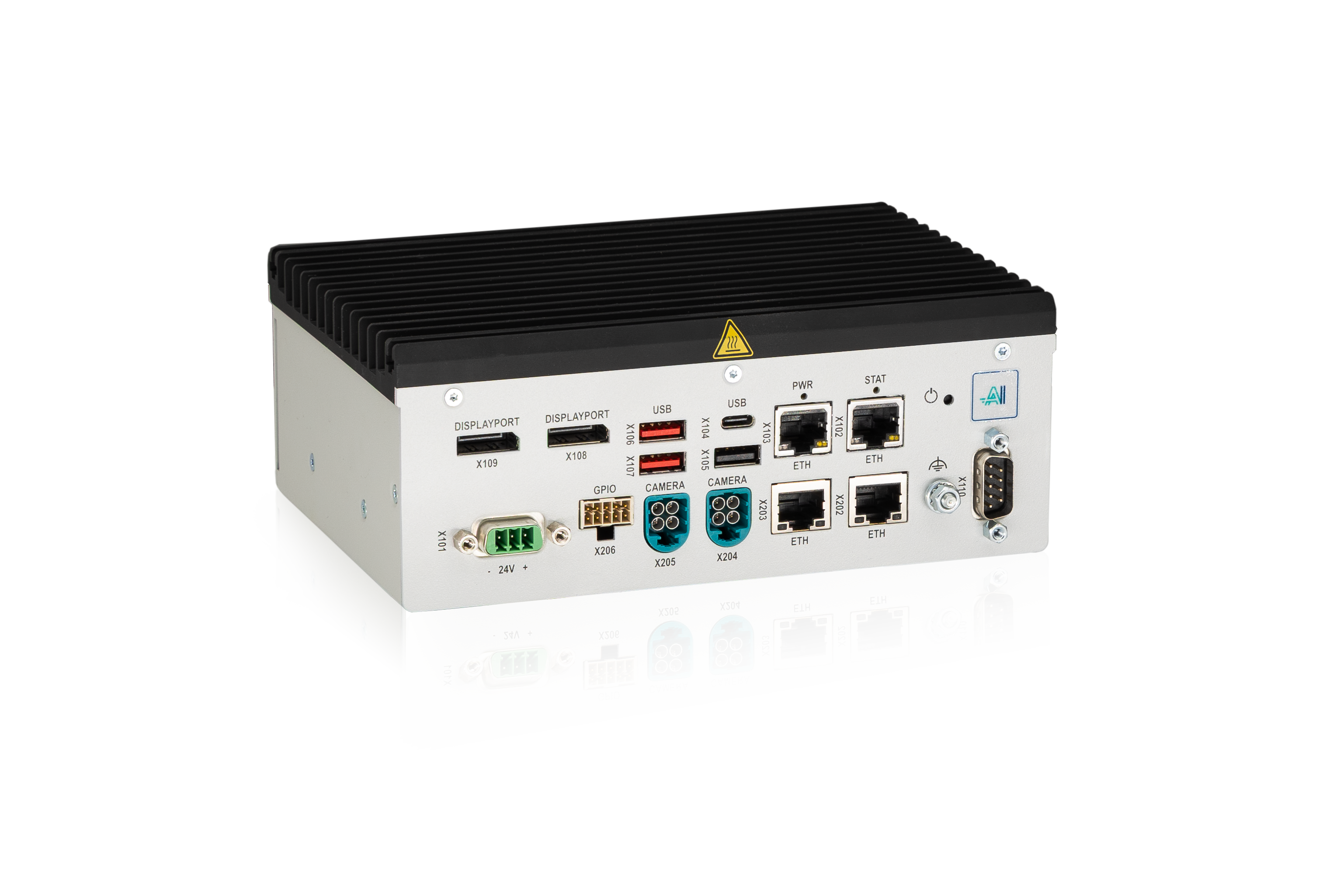
Kontron has launched the KBox A-151-PTL-ROBO, a rugged industrial computing platform built specifically for robotics applications that demand real-time perception and decision-making at the edge. The system is powered by Intel Core Ultra 300 Series processors, combining CPU, GPU and NPU resources on a single chip to deliver up to 180 TOPS of AI compute.
What distinguishes this release from a typical hardware refresh is the pairing with Intel's Robotics AI Suite — a publicly available software stack of pre-integrated frameworks and middleware for robotics development. For engineers, this matters because the bottleneck in deploying industrial robotics is rarely raw compute; it is the integration work required to stitch together vision pipelines, AI inference, and motion control reliably. By offering validated hardware alongside a ready software layer, Kontron is addressing the development risk and total cost of ownership that typically slow projects from proof-of-concept to production.
Why procurement teams should care
For buyers specifying edge AI controllers in robotics, automation or inspection systems, the KBox A-151-PTL-ROBO offers a combination that is hard to source piecemeal: industrial-grade ruggedization, long lifecycle component availability, and a scalable architecture that avoids redesign when moving from pilot to volume deployment. The integrated NPU architecture also reduces the need for separate AI accelerator cards, simplifying BOM and lowering failure points in field-deployed systems.
Built on Kontron's rugged industrial design, the platform offers long lifecycle availability, industrial connectivity, and reliable operation in demanding environments.
Industrial connectivity options and a design built for continuous operation make this platform relevant beyond factory robotics — autonomous mobile robots, inspection systems, and machine vision applications in harsh environments all stand to benefit from reduced integration complexity and vendor-supported lifecycle management.
Nordic relevance
Nordic manufacturing and automation sectors — from automotive to maritime and process industries — are increasingly investing in robotics and autonomous systems to address labour constraints and improve throughput. A platform that shortens the path from prototype to deployed robotics application, while meeting industrial durability standards expected in Nordic production environments, is directly applicable to local system integrators and OEMs building next-generation automation.
Engineers evaluating edge AI robotics platforms should weigh not just raw TOPS figures but software ecosystem maturity, lifecycle support, and environmental robustness — all of which factor into long-term deployment cost.